





CLEAN + CONSCIOUS AWARDS 2026 PROUDLY PARTNERED WITH


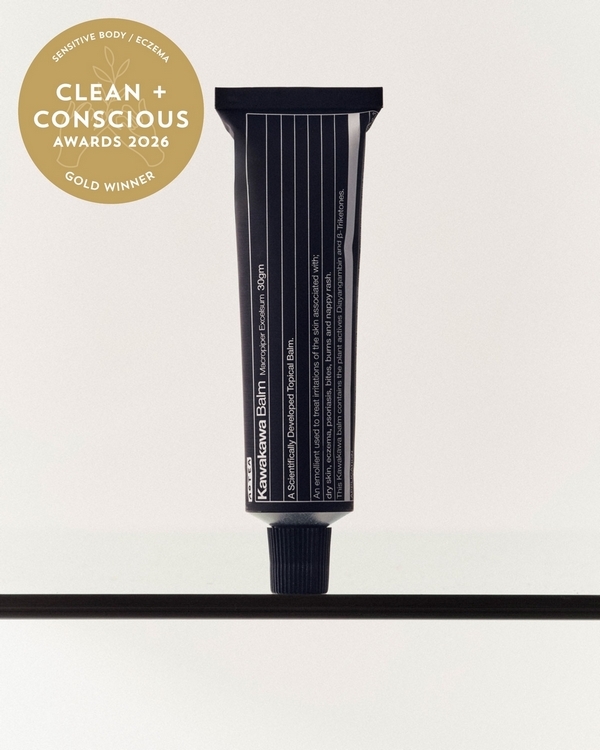

The Aotea Kawakawa Balm is like a really comforting, old-school style eczema support product that focuses on calming and protecting the skin rather than overcomplicating things. I like that it’s made with simple, natural ingredients like kawakawa, manuka oil, and beeswax, which all feel very intentional for soothing inflammation, reducing irritation, and helping support the skin barrier when things feel dry, itchy, or flarey. It goes on balmy, but doesn’t feel thick or uncomfortable once applied. I do like that it comes in a jar and a tube, so you have the flexibility of packaging choice. Being a small, NZ-based brand that leans heavily into traditional Māori plant knowledge and locally sourced ingredients, it gives a really grounded, place-based approach to skincare. It feels less like a heavily industrial skincare brand and more like something built around natural healing traditions and small-batch production, which feels beautiful to use.
Three ingredients. That’s it. And somehow this balm does more for irritated, compromised skin than most prescription alternatives I’ve used. The texture is incredibly smooth and velvety, it layers beautifully without feeling heavy, and the calming effect is almost immediate. As someone who’s previously relied on steroid creams to manage psoriasis, finding something this clean and this effective is life-changing. Aotea embodies sustainability in every aspect. Solar powered, zero waste production where biomass feeds the next crop, water recirculated back into distillation, everything grown and made on the same remote island. But what moves me most is the intentionality around keeping manufacturing on Aotea specifically, a remote community with limited economic pathways, when it would be considerably cheaper not to. That’s genuine social responsibility.
It feels immediately soothing on irritated or dry patches, with a rich but non-greasy texture that settles comfortably into the skin. A little goes a long way, and it leaves the skin feeling calmer and more resilient by morning. The natural scent is grounding and herbal without being overpowering. The fact that everything is grown, extracted, and manufactured on Aotea within a closed-loop system feels genuinely considered. The alignment with tikanga Māori and reinvestment into community employment and knowledge preservation gives this brand a level of cultural and structural integrity.
 The Aotea Kawakawa Balm is like a really comforting, old-school style eczema support product that focuses on calming and protecting the skin rather than overcomplicating things. I like that it’s made with simple, natural ingredients like kawakawa, manuka oil, and beeswax, which all feel very intentional for soothing inflammation, reducing irritation, and helping support the skin barrier when things feel dry, itchy, or flarey. It goes on balmy, but doesn’t feel thick or uncomfortable once applied. I do like that it comes in a jar and a tube, so you have the flexibility of packaging choice. Being a small, NZ-based brand that leans heavily into traditional Māori plant knowledge and locally sourced ingredients, it gives a really grounded, place-based approach to skincare. It feels less like a heavily industrial skincare brand and more like something built around natural healing traditions and small-batch production, which feels beautiful to use. Three ingredients. That’s it. And somehow this balm does more for irritated, compromised skin than most prescription alternatives I’ve used. The texture is incredibly smooth and velvety, it layers beautifully without feeling heavy, and the calming effect is almost immediate. As someone who’s previously relied on steroid creams to manage psoriasis, finding something this clean and this effective is life-changing. Aotea embodies sustainability in every aspect. Solar powered, zero waste production where biomass feeds the next crop, water recirculated back into distillation, everything grown and made on the same remote island. But what moves me most is the intentionality around keeping manufacturing on Aotea specifically, a remote community with limited economic pathways, when it would be considerably cheaper not to. That’s genuine social responsibility. It feels immediately soothing on irritated or dry patches, with a rich but non-greasy texture that settles comfortably into the skin. A little goes a long way, and it leaves the skin feeling calmer and more resilient by morning. The natural scent is grounding and herbal without being overpowering. The fact that everything is grown, extracted, and manufactured on Aotea within a closed-loop system feels genuinely considered. The alignment with tikanga Māori and reinvestment into community employment and knowledge preservation gives this brand a level of cultural and structural integrity. The Aotea Kawakawa Balm is like a really comforting, old-school style eczema support product that focuses on calming and protecting the skin rather than overcomplicating things. I like that it’s made with simple, natural ingredients like kawakawa, manuka oil, and beeswax, which all feel very intentional for soothing inflammation, reducing irritation, and helping support the skin barrier when things feel dry, itchy, or flarey. It goes on balmy, but doesn’t feel thick or uncomfortable once applied. I do like that it comes in a jar and a tube, so you have the flexibility of packaging choice. Being a small, NZ-based brand that leans heavily into traditional Māori plant knowledge and locally sourced ingredients, it gives a really grounded, place-based approach to skincare. It feels less like a heavily industrial skincare brand and more like something built around natural healing traditions and small-batch production, which feels beautiful to use. Three ingredients. That’s it. And somehow this balm does more for irritated, compromised skin than most prescription alternatives I’ve used. The texture is incredibly smooth and velvety, it layers beautifully without feeling heavy, and the calming effect is almost immediate. As someone who’s previously relied on steroid creams to manage psoriasis, finding something this clean and this effective is life-changing. Aotea embodies sustainability in every aspect. Solar powered, zero waste production where biomass feeds the next crop, water recirculated back into distillation, everything grown and made on the same remote island. But what moves me most is the intentionality around keeping manufacturing on Aotea specifically, a remote community with limited economic pathways, when it would be considerably cheaper not to. That’s genuine social responsibility. It feels immediately soothing on irritated or dry patches, with a rich but non-greasy texture that settles comfortably into the skin. A little goes a long way, and it leaves the skin feeling calmer and more resilient by morning. The natural scent is grounding and herbal without being overpowering. The fact that everything is grown, extracted, and manufactured on Aotea within a closed-loop system feels genuinely considered. The alignment with tikanga Māori and reinvestment into community employment and knowledge preservation gives this brand a level of cultural and structural integrity. The Aotea Kawakawa Balm is like a really comforting, old-school style eczema support product that focuses on calming and protecting the skin rather than overcomplicating things. I like that it’s made with simple, natural ingredients like kawakawa, manuka oil, and beeswax, which all feel very intentional for soothing inflammation, reducing irritation, and helping support the skin barrier when things feel dry, itchy, or flarey. It goes on balmy, but doesn’t feel thick or uncomfortable once applied. I do like that it comes in a jar and a tube, so you have the flexibility of packaging choice. Being a small, NZ-based brand that leans heavily into traditional Māori plant knowledge and locally sourced ingredients, it gives a really grounded, place-based approach to skincare. It feels less like a heavily industrial skincare brand and more like something built around natural healing traditions and small-batch production, which feels beautiful to use. Three ingredients. That’s it. And somehow this balm does more for irritated, compromised skin than most prescription alternatives I’ve used. The texture is incredibly smooth and velvety, it layers beautifully without feeling heavy, and the calming effect is almost immediate. As someone who’s previously relied on steroid creams to manage psoriasis, finding something this clean and this effective is life-changing. Aotea embodies sustainability in every aspect. Solar powered, zero waste production where biomass feeds the next crop, water recirculated back into distillation, everything grown and made on the same remote island. But what moves me most is the intentionality around keeping manufacturing on Aotea specifically, a remote community with limited economic pathways, when it would be considerably cheaper not to. That’s genuine social responsibility. It feels immediately soothing on irritated or dry patches, with a rich but non-greasy texture that settles comfortably into the skin. A little goes a long way, and it leaves the skin feeling calmer and more resilient by morning. The natural scent is grounding and herbal without being overpowering. The fact that everything is grown, extracted, and manufactured on Aotea within a closed-loop system feels genuinely considered. The alignment with tikanga Māori and reinvestment into community employment and knowledge preservation gives this brand a level of cultural and structural integrity. The Aotea Kawakawa Balm is like a really comforting, old-school style eczema support product that focuses on calming and protecting the skin rather than overcomplicating things. I like that it’s made with simple, natural ingredients like kawakawa, manuka oil, and beeswax, which all feel very intentional for soothing inflammation, reducing irritation, and helping support the skin barrier when things feel dry, itchy, or flarey. It goes on balmy, but doesn’t feel thick or uncomfortable once applied. I do like that it comes in a jar and a tube, so you have the flexibility of packaging choice. Being a small, NZ-based brand that leans heavily into traditional Māori plant knowledge and locally sourced ingredients, it gives a really grounded, place-based approach to skincare. It feels less like a heavily industrial skincare brand and more like something built around natural healing traditions and small-batch production, which feels beautiful to use. Three ingredients. That’s it. And somehow this balm does more for irritated, compromised skin than most prescription alternatives I’ve used. The texture is incredibly smooth and velvety, it layers beautifully without feeling heavy, and the calming effect is almost immediate. As someone who’s previously relied on steroid creams to manage psoriasis, finding something this clean and this effective is life-changing. Aotea embodies sustainability in every aspect. Solar powered, zero waste production where biomass feeds the next crop, water recirculated back into distillation, everything grown and made on the same remote island. But what moves me most is the intentionality around keeping manufacturing on Aotea specifically, a remote community with limited economic pathways, when it would be considerably cheaper not to. That’s genuine social responsibility. It feels immediately soothing on irritated or dry patches, with a rich but non-greasy texture that settles comfortably into the skin. A little goes a long way, and it leaves the skin feeling calmer and more resilient by morning. The natural scent is grounding and herbal without being overpowering. The fact that everything is grown, extracted, and manufactured on Aotea within a closed-loop system feels genuinely considered. The alignment with tikanga Māori and reinvestment into community employment and knowledge preservation gives this brand a level of cultural and structural integrity.