







CLEAN + CONSCIOUS AWARDS 2026 PROUDLY PARTNERED WITH


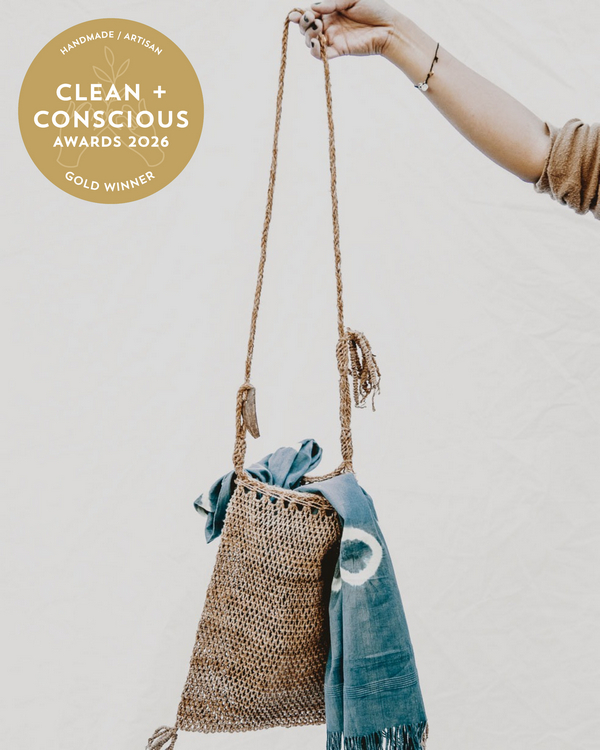

There’s soul in every strand. The Koja is hand-twined from Terap tree bark by weavers in Indonesia, with no electricity involved at any step, and you can feel that human touch in the irregular, beautiful weave. It’s light, surprisingly roomy and I guess it would age into something lovelier. A market bag that doubles as an object you’d hang on the wall. This is craft as preservation. RUPAHAUS partners with 25 Kanekes artisans, part of a network of more than a hundred across eight collectives, and pays for skills that would otherwise fade. The material is regenerative bark, the method is entirely manual, the footprint close to nothing. Slow, human and deeply considered.
I love that the Koja Bag combines timeless craftsmanship with thoughtful design. It’s lightweight, beautifully handmade and feels like a piece designed to last. Knowing each bag is created entirely by hand using natural materials makes it feel even more special, and I appreciate that it celebrates traditional skills while creating something that is both practical and stylish. What impressed me most was the brand’s holistic approach to sustainability. Rather than focusing solely on materials, they have demonstrated genuine consideration for every stage of the supply chain, from regenerative harvesting and manual production through to fair artisan partnerships, cultural respect, circularity and end-of-life responsibility. Their long-term commitment to working directly with artisan communities, paying well above minimum wage and reinvesting back into those communities reflects a thoughtful approach to sustainability that goes beyond environmental impact alone.
It’s a stylish and unique bag that I can use with different outfits. I love the timeless design and natural materials because I can rest in the knowledge that there are no toxic materials and I can pass it onto someone who will cherish it as much as I have. The Koja Bag collaboration and business is one of the primary income sources for a community in Indonesia with 5% of annual revenue being reinvested into artisan communities. The Koja Bag is evidence that Indigenous craftsmanship can remain economically viable while respecting cultural boundaries, governance systems, and environmental stewardship practices. Made from the natural materials of the peeled bark of the Terap tree without felling the tree. Returned pieces from their takeback program are either repaired, repurposed, or responsibly composted.
 There’s soul in every strand. The Koja is hand-twined from Terap tree bark by weavers in Indonesia, with no electricity involved at any step, and you can feel that human touch in the irregular, beautiful weave. It’s light, surprisingly roomy and I guess it would age into something lovelier. A market bag that doubles as an object you’d hang on the wall. This is craft as preservation. RUPAHAUS partners with 25 Kanekes artisans, part of a network of more than a hundred across eight collectives, and pays for skills that would otherwise fade. The material is regenerative bark, the method is entirely manual, the footprint close to nothing. Slow, human and deeply considered. I love that the Koja Bag combines timeless craftsmanship with thoughtful design. It’s lightweight, beautifully handmade and feels like a piece designed to last. Knowing each bag is created entirely by hand using natural materials makes it feel even more special, and I appreciate that it celebrates traditional skills while creating something that is both practical and stylish. What impressed me most was the brand’s holistic approach to sustainability. Rather than focusing solely on materials, they have demonstrated genuine consideration for every stage of the supply chain, from regenerative harvesting and manual production through to fair artisan partnerships, cultural respect, circularity and end-of-life responsibility. Their long-term commitment to working directly with artisan communities, paying well above minimum wage and reinvesting back into those communities reflects a thoughtful approach to sustainability that goes beyond environmental impact alone. It’s a stylish and unique bag that I can use with different outfits. I love the timeless design and natural materials because I can rest in the knowledge that there are no toxic materials and I can pass it onto someone who will cherish it as much as I have. The Koja Bag collaboration and business is one of the primary income sources for a community in Indonesia with 5% of annual revenue being reinvested into artisan communities. The Koja Bag is evidence that Indigenous craftsmanship can remain economically viable while respecting cultural boundaries, governance systems, and environmental stewardship practices. Made from the natural materials of the peeled bark of the Terap tree without felling the tree. Returned pieces from their takeback program are either repaired, repurposed, or responsibly composted. There’s soul in every strand. The Koja is hand-twined from Terap tree bark by weavers in Indonesia, with no electricity involved at any step, and you can feel that human touch in the irregular, beautiful weave. It’s light, surprisingly roomy and I guess it would age into something lovelier. A market bag that doubles as an object you’d hang on the wall. This is craft as preservation. RUPAHAUS partners with 25 Kanekes artisans, part of a network of more than a hundred across eight collectives, and pays for skills that would otherwise fade. The material is regenerative bark, the method is entirely manual, the footprint close to nothing. Slow, human and deeply considered. I love that the Koja Bag combines timeless craftsmanship with thoughtful design. It’s lightweight, beautifully handmade and feels like a piece designed to last. Knowing each bag is created entirely by hand using natural materials makes it feel even more special, and I appreciate that it celebrates traditional skills while creating something that is both practical and stylish. What impressed me most was the brand’s holistic approach to sustainability. Rather than focusing solely on materials, they have demonstrated genuine consideration for every stage of the supply chain, from regenerative harvesting and manual production through to fair artisan partnerships, cultural respect, circularity and end-of-life responsibility. Their long-term commitment to working directly with artisan communities, paying well above minimum wage and reinvesting back into those communities reflects a thoughtful approach to sustainability that goes beyond environmental impact alone. It’s a stylish and unique bag that I can use with different outfits. I love the timeless design and natural materials because I can rest in the knowledge that there are no toxic materials and I can pass it onto someone who will cherish it as much as I have. The Koja Bag collaboration and business is one of the primary income sources for a community in Indonesia with 5% of annual revenue being reinvested into artisan communities. The Koja Bag is evidence that Indigenous craftsmanship can remain economically viable while respecting cultural boundaries, governance systems, and environmental stewardship practices. Made from the natural materials of the peeled bark of the Terap tree without felling the tree. Returned pieces from their takeback program are either repaired, repurposed, or responsibly composted. There’s soul in every strand. The Koja is hand-twined from Terap tree bark by weavers in Indonesia, with no electricity involved at any step, and you can feel that human touch in the irregular, beautiful weave. It’s light, surprisingly roomy and I guess it would age into something lovelier. A market bag that doubles as an object you’d hang on the wall. This is craft as preservation. RUPAHAUS partners with 25 Kanekes artisans, part of a network of more than a hundred across eight collectives, and pays for skills that would otherwise fade. The material is regenerative bark, the method is entirely manual, the footprint close to nothing. Slow, human and deeply considered. I love that the Koja Bag combines timeless craftsmanship with thoughtful design. It’s lightweight, beautifully handmade and feels like a piece designed to last. Knowing each bag is created entirely by hand using natural materials makes it feel even more special, and I appreciate that it celebrates traditional skills while creating something that is both practical and stylish. What impressed me most was the brand’s holistic approach to sustainability. Rather than focusing solely on materials, they have demonstrated genuine consideration for every stage of the supply chain, from regenerative harvesting and manual production through to fair artisan partnerships, cultural respect, circularity and end-of-life responsibility. Their long-term commitment to working directly with artisan communities, paying well above minimum wage and reinvesting back into those communities reflects a thoughtful approach to sustainability that goes beyond environmental impact alone. It’s a stylish and unique bag that I can use with different outfits. I love the timeless design and natural materials because I can rest in the knowledge that there are no toxic materials and I can pass it onto someone who will cherish it as much as I have. The Koja Bag collaboration and business is one of the primary income sources for a community in Indonesia with 5% of annual revenue being reinvested into artisan communities. The Koja Bag is evidence that Indigenous craftsmanship can remain economically viable while respecting cultural boundaries, governance systems, and environmental stewardship practices. Made from the natural materials of the peeled bark of the Terap tree without felling the tree. Returned pieces from their takeback program are either repaired, repurposed, or responsibly composted. There’s soul in every strand. The Koja is hand-twined from Terap tree bark by weavers in Indonesia, with no electricity involved at any step, and you can feel that human touch in the irregular, beautiful weave. It’s light, surprisingly roomy and I guess it would age into something lovelier. A market bag that doubles as an object you’d hang on the wall. This is craft as preservation. RUPAHAUS partners with 25 Kanekes artisans, part of a network of more than a hundred across eight collectives, and pays for skills that would otherwise fade. The material is regenerative bark, the method is entirely manual, the footprint close to nothing. Slow, human and deeply considered. I love that the Koja Bag combines timeless craftsmanship with thoughtful design. It’s lightweight, beautifully handmade and feels like a piece designed to last. Knowing each bag is created entirely by hand using natural materials makes it feel even more special, and I appreciate that it celebrates traditional skills while creating something that is both practical and stylish. What impressed me most was the brand’s holistic approach to sustainability. Rather than focusing solely on materials, they have demonstrated genuine consideration for every stage of the supply chain, from regenerative harvesting and manual production through to fair artisan partnerships, cultural respect, circularity and end-of-life responsibility. Their long-term commitment to working directly with artisan communities, paying well above minimum wage and reinvesting back into those communities reflects a thoughtful approach to sustainability that goes beyond environmental impact alone. It’s a stylish and unique bag that I can use with different outfits. I love the timeless design and natural materials because I can rest in the knowledge that there are no toxic materials and I can pass it onto someone who will cherish it as much as I have. The Koja Bag collaboration and business is one of the primary income sources for a community in Indonesia with 5% of annual revenue being reinvested into artisan communities. The Koja Bag is evidence that Indigenous craftsmanship can remain economically viable while respecting cultural boundaries, governance systems, and environmental stewardship practices. Made from the natural materials of the peeled bark of the Terap tree without felling the tree. Returned pieces from their takeback program are either repaired, repurposed, or responsibly composted.