





CLEAN + CONSCIOUS AWARDS 2026 PROUDLY PARTNERED WITH


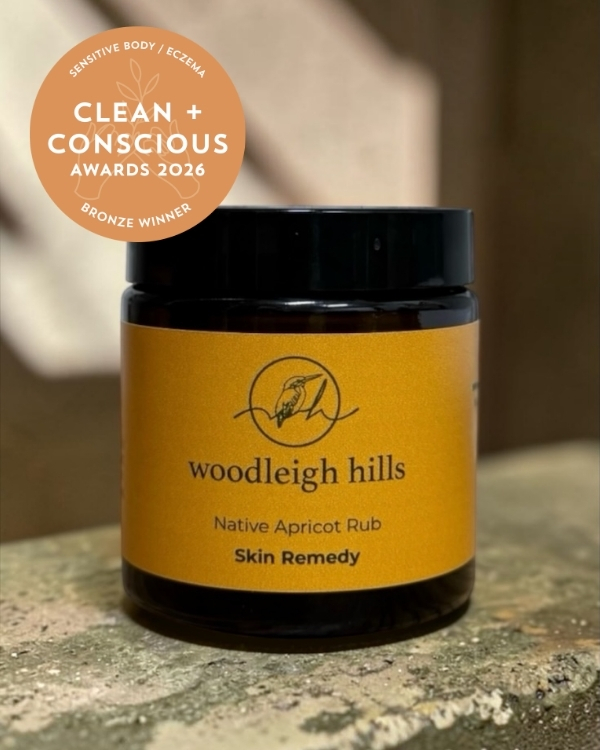

I really like that this uses native Australian ingredients like native apricot, infused in olive oil and beeswax, giving it a really nourishing, protective feel on the skin. Almost like it’s helping to calm and shield irritated or dry patches with a protective layer rather than aggressively treating them. It feels especially supportive for when things are feeling inflamed, itchy and just out of balance. Woodleigh Hills stands out as a really values-led Australian farm-based business that feels deeply grounded in care, transparency and community. I really like the focus on small-batch production, ethical sourcing and the strong emphasis on the people behind the brand. It feels like a brand that’s genuinely embedded in its values rather than just talking about them.
Three ingredients, all traceable to a working family farm in South Australia. The consistency is beautiful, rich without being heavy, and it absorbs in a way that feels restorative rather than just coating the surface. For anyone navigating chronic skin conditions, there’s also something deeply reassuring about knowing exactly what you’re putting on your skin and where every element came from. What moves me most about Woodleigh Hills is the detail that nobody made them include. Growing native botanicals on farm rather than wild harvesting to protect vulnerable ecosystems, partnering with Aboriginal Community Elders, quietly gifting a 12 month product supply to a child with chronic eczema without ever seeking recognition for it. This is a brand that lives its values in the most unglamorous and sincere way possible.
It has a really comforting, old-school balm feel, and in a good way. It’s simple, soothing and sits nicely on flare-prone areas without irritating the skin further. The transparency here is probably the biggest win. You can actually see where things are coming from, especially with the farm-grown ingredients and local sourcing. There’s a real sense of community and practicality behind everything.
 I really like that this uses native Australian ingredients like native apricot, infused in olive oil and beeswax, giving it a really nourishing, protective feel on the skin. Almost like it’s helping to calm and shield irritated or dry patches with a protective layer rather than aggressively treating them. It feels especially supportive for when things are feeling inflamed, itchy and just out of balance. Woodleigh Hills stands out as a really values-led Australian farm-based business that feels deeply grounded in care, transparency and community. I really like the focus on small-batch production, ethical sourcing and the strong emphasis on the people behind the brand. It feels like a brand that’s genuinely embedded in its values rather than just talking about them. Three ingredients, all traceable to a working family farm in South Australia. The consistency is beautiful, rich without being heavy, and it absorbs in a way that feels restorative rather than just coating the surface. For anyone navigating chronic skin conditions, there’s also something deeply reassuring about knowing exactly what you’re putting on your skin and where every element came from. What moves me most about Woodleigh Hills is the detail that nobody made them include. Growing native botanicals on farm rather than wild harvesting to protect vulnerable ecosystems, partnering with Aboriginal Community Elders, quietly gifting a 12 month product supply to a child with chronic eczema without ever seeking recognition for it. This is a brand that lives its values in the most unglamorous and sincere way possible. It has a really comforting, old-school balm feel, and in a good way. It’s simple, soothing and sits nicely on flare-prone areas without irritating the skin further. The transparency here is probably the biggest win. You can actually see where things are coming from, especially with the farm-grown ingredients and local sourcing. There’s a real sense of community and practicality behind everything. I really like that this uses native Australian ingredients like native apricot, infused in olive oil and beeswax, giving it a really nourishing, protective feel on the skin. Almost like it’s helping to calm and shield irritated or dry patches with a protective layer rather than aggressively treating them. It feels especially supportive for when things are feeling inflamed, itchy and just out of balance. Woodleigh Hills stands out as a really values-led Australian farm-based business that feels deeply grounded in care, transparency and community. I really like the focus on small-batch production, ethical sourcing and the strong emphasis on the people behind the brand. It feels like a brand that’s genuinely embedded in its values rather than just talking about them. Three ingredients, all traceable to a working family farm in South Australia. The consistency is beautiful, rich without being heavy, and it absorbs in a way that feels restorative rather than just coating the surface. For anyone navigating chronic skin conditions, there’s also something deeply reassuring about knowing exactly what you’re putting on your skin and where every element came from. What moves me most about Woodleigh Hills is the detail that nobody made them include. Growing native botanicals on farm rather than wild harvesting to protect vulnerable ecosystems, partnering with Aboriginal Community Elders, quietly gifting a 12 month product supply to a child with chronic eczema without ever seeking recognition for it. This is a brand that lives its values in the most unglamorous and sincere way possible. It has a really comforting, old-school balm feel, and in a good way. It’s simple, soothing and sits nicely on flare-prone areas without irritating the skin further. The transparency here is probably the biggest win. You can actually see where things are coming from, especially with the farm-grown ingredients and local sourcing. There’s a real sense of community and practicality behind everything. I really like that this uses native Australian ingredients like native apricot, infused in olive oil and beeswax, giving it a really nourishing, protective feel on the skin. Almost like it’s helping to calm and shield irritated or dry patches with a protective layer rather than aggressively treating them. It feels especially supportive for when things are feeling inflamed, itchy and just out of balance. Woodleigh Hills stands out as a really values-led Australian farm-based business that feels deeply grounded in care, transparency and community. I really like the focus on small-batch production, ethical sourcing and the strong emphasis on the people behind the brand. It feels like a brand that’s genuinely embedded in its values rather than just talking about them. Three ingredients, all traceable to a working family farm in South Australia. The consistency is beautiful, rich without being heavy, and it absorbs in a way that feels restorative rather than just coating the surface. For anyone navigating chronic skin conditions, there’s also something deeply reassuring about knowing exactly what you’re putting on your skin and where every element came from. What moves me most about Woodleigh Hills is the detail that nobody made them include. Growing native botanicals on farm rather than wild harvesting to protect vulnerable ecosystems, partnering with Aboriginal Community Elders, quietly gifting a 12 month product supply to a child with chronic eczema without ever seeking recognition for it. This is a brand that lives its values in the most unglamorous and sincere way possible. It has a really comforting, old-school balm feel, and in a good way. It’s simple, soothing and sits nicely on flare-prone areas without irritating the skin further. The transparency here is probably the biggest win. You can actually see where things are coming from, especially with the farm-grown ingredients and local sourcing. There’s a real sense of community and practicality behind everything. I really like that this uses native Australian ingredients like native apricot, infused in olive oil and beeswax, giving it a really nourishing, protective feel on the skin. Almost like it’s helping to calm and shield irritated or dry patches with a protective layer rather than aggressively treating them. It feels especially supportive for when things are feeling inflamed, itchy and just out of balance. Woodleigh Hills stands out as a really values-led Australian farm-based business that feels deeply grounded in care, transparency and community. I really like the focus on small-batch production, ethical sourcing and the strong emphasis on the people behind the brand. It feels like a brand that’s genuinely embedded in its values rather than just talking about them. Three ingredients, all traceable to a working family farm in South Australia. The consistency is beautiful, rich without being heavy, and it absorbs in a way that feels restorative rather than just coating the surface. For anyone navigating chronic skin conditions, there’s also something deeply reassuring about knowing exactly what you’re putting on your skin and where every element came from. What moves me most about Woodleigh Hills is the detail that nobody made them include. Growing native botanicals on farm rather than wild harvesting to protect vulnerable ecosystems, partnering with Aboriginal Community Elders, quietly gifting a 12 month product supply to a child with chronic eczema without ever seeking recognition for it. This is a brand that lives its values in the most unglamorous and sincere way possible. It has a really comforting, old-school balm feel, and in a good way. It’s simple, soothing and sits nicely on flare-prone areas without irritating the skin further. The transparency here is probably the biggest win. You can actually see where things are coming from, especially with the farm-grown ingredients and local sourcing. There’s a real sense of community and practicality behind everything.