







CLEAN + CONSCIOUS AWARDS 2026 PROUDLY PARTNERED WITH


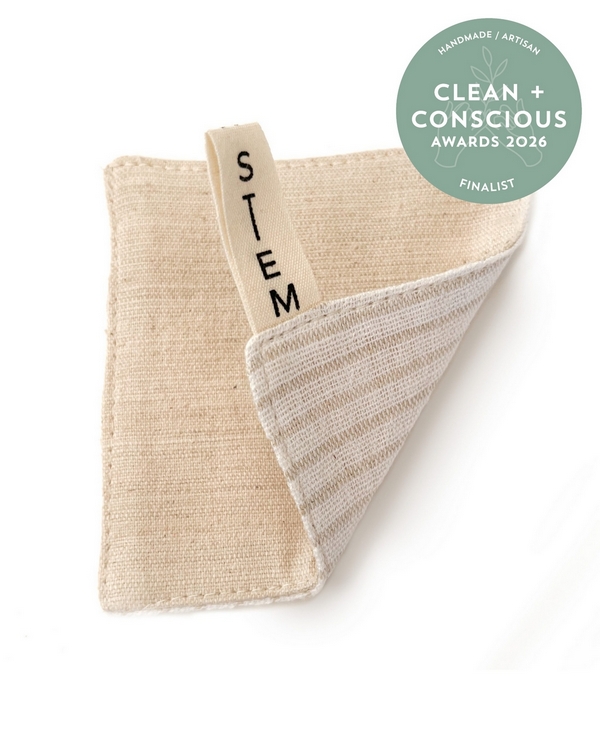

Lotus silk is the surprise here. The exfoliating side sloughs without the micro-tearing you get from a rough mitt, and the polishing side leaves skin buffed and calm. It’s compact, quick to dry and feels far more considered than the usual cloth. A small daily ritual upgrade for anyone weaning off single-use pads. The material choice is the star. Lotus silk is among the most sustainable textiles going, historically so prized it was reserved for royalty, blended here with organic cotton. I like that they went looking for an ethically made cloth, found none, and made one. That’s the right instinct in a category built on cheap labour.
I’m epically impressed with Acala Stem’s model of partnering with seamstresses in Cambodia to provide vulnerable women with well-paid, flexible, work-from-home employment. It enables mothers to earn a living wage while staying with their children, which prevents family separation and drastically reduces the risk of children entering orphanages, trafficking, or labour. We need more of these types of social enterprises please! Lotus silk, used for the Exfoliator & Cleansing Cloth, is the most sustainable textile in the world and Acala Stem is pioneering the new ethical luxury category. All cleansing cloths are off-cuts from their scarves, kimonos and kaftans. I love how they’re taking a stance to eliminate nylon, bamboo and petro-chemical cleansing cloths with the brand’s chemical, bleach and dye free products.
I love that this cleansing cloth gives new life to production offcuts, ensuring valuable natural fibres are used to their fullest potential rather than going to waste. It’s a thoughtful example of circular design, and I appreciate the focus on natural, reusable materials that help reduce waste over time. What impressed me most was that they are clearly trying to create meaningful change rather than simply sell another skincare product. Their commitment to supporting women artisans, reducing reliance on synthetic cleansing cloths, minimising waste through the use of offcuts and investing in product testing demonstrates a thoughtful and credible approach to sustainability.
 Lotus silk is the surprise here. The exfoliating side sloughs without the micro-tearing you get from a rough mitt, and the polishing side leaves skin buffed and calm. It’s compact, quick to dry and feels far more considered than the usual cloth. A small daily ritual upgrade for anyone weaning off single-use pads. The material choice is the star. Lotus silk is among the most sustainable textiles going, historically so prized it was reserved for royalty, blended here with organic cotton. I like that they went looking for an ethically made cloth, found none, and made one. That’s the right instinct in a category built on cheap labour. I’m epically impressed with Acala Stem’s model of partnering with seamstresses in Cambodia to provide vulnerable women with well-paid, flexible, work-from-home employment. It enables mothers to earn a living wage while staying with their children, which prevents family separation and drastically reduces the risk of children entering orphanages, trafficking, or labour. We need more of these types of social enterprises please! Lotus silk, used for the Exfoliator & Cleansing Cloth, is the most sustainable textile in the world and Acala Stem is pioneering the new ethical luxury category. All cleansing cloths are off-cuts from their scarves, kimonos and kaftans. I love how they’re taking a stance to eliminate nylon, bamboo and petro-chemical cleansing cloths with the brand’s chemical, bleach and dye free products. I love that this cleansing cloth gives new life to production offcuts, ensuring valuable natural fibres are used to their fullest potential rather than going to waste. It’s a thoughtful example of circular design, and I appreciate the focus on natural, reusable materials that help reduce waste over time. What impressed me most was that they are clearly trying to create meaningful change rather than simply sell another skincare product. Their commitment to supporting women artisans, reducing reliance on synthetic cleansing cloths, minimising waste through the use of offcuts and investing in product testing demonstrates a thoughtful and credible approach to sustainability. Lotus silk is the surprise here. The exfoliating side sloughs without the micro-tearing you get from a rough mitt, and the polishing side leaves skin buffed and calm. It’s compact, quick to dry and feels far more considered than the usual cloth. A small daily ritual upgrade for anyone weaning off single-use pads. The material choice is the star. Lotus silk is among the most sustainable textiles going, historically so prized it was reserved for royalty, blended here with organic cotton. I like that they went looking for an ethically made cloth, found none, and made one. That’s the right instinct in a category built on cheap labour. I’m epically impressed with Acala Stem’s model of partnering with seamstresses in Cambodia to provide vulnerable women with well-paid, flexible, work-from-home employment. It enables mothers to earn a living wage while staying with their children, which prevents family separation and drastically reduces the risk of children entering orphanages, trafficking, or labour. We need more of these types of social enterprises please! Lotus silk, used for the Exfoliator & Cleansing Cloth, is the most sustainable textile in the world and Acala Stem is pioneering the new ethical luxury category. All cleansing cloths are off-cuts from their scarves, kimonos and kaftans. I love how they’re taking a stance to eliminate nylon, bamboo and petro-chemical cleansing cloths with the brand’s chemical, bleach and dye free products. I love that this cleansing cloth gives new life to production offcuts, ensuring valuable natural fibres are used to their fullest potential rather than going to waste. It’s a thoughtful example of circular design, and I appreciate the focus on natural, reusable materials that help reduce waste over time. What impressed me most was that they are clearly trying to create meaningful change rather than simply sell another skincare product. Their commitment to supporting women artisans, reducing reliance on synthetic cleansing cloths, minimising waste through the use of offcuts and investing in product testing demonstrates a thoughtful and credible approach to sustainability. Lotus silk is the surprise here. The exfoliating side sloughs without the micro-tearing you get from a rough mitt, and the polishing side leaves skin buffed and calm. It’s compact, quick to dry and feels far more considered than the usual cloth. A small daily ritual upgrade for anyone weaning off single-use pads. The material choice is the star. Lotus silk is among the most sustainable textiles going, historically so prized it was reserved for royalty, blended here with organic cotton. I like that they went looking for an ethically made cloth, found none, and made one. That’s the right instinct in a category built on cheap labour. I’m epically impressed with Acala Stem’s model of partnering with seamstresses in Cambodia to provide vulnerable women with well-paid, flexible, work-from-home employment. It enables mothers to earn a living wage while staying with their children, which prevents family separation and drastically reduces the risk of children entering orphanages, trafficking, or labour. We need more of these types of social enterprises please! Lotus silk, used for the Exfoliator & Cleansing Cloth, is the most sustainable textile in the world and Acala Stem is pioneering the new ethical luxury category. All cleansing cloths are off-cuts from their scarves, kimonos and kaftans. I love how they’re taking a stance to eliminate nylon, bamboo and petro-chemical cleansing cloths with the brand’s chemical, bleach and dye free products. I love that this cleansing cloth gives new life to production offcuts, ensuring valuable natural fibres are used to their fullest potential rather than going to waste. It’s a thoughtful example of circular design, and I appreciate the focus on natural, reusable materials that help reduce waste over time. What impressed me most was that they are clearly trying to create meaningful change rather than simply sell another skincare product. Their commitment to supporting women artisans, reducing reliance on synthetic cleansing cloths, minimising waste through the use of offcuts and investing in product testing demonstrates a thoughtful and credible approach to sustainability. Lotus silk is the surprise here. The exfoliating side sloughs without the micro-tearing you get from a rough mitt, and the polishing side leaves skin buffed and calm. It’s compact, quick to dry and feels far more considered than the usual cloth. A small daily ritual upgrade for anyone weaning off single-use pads. The material choice is the star. Lotus silk is among the most sustainable textiles going, historically so prized it was reserved for royalty, blended here with organic cotton. I like that they went looking for an ethically made cloth, found none, and made one. That’s the right instinct in a category built on cheap labour. I’m epically impressed with Acala Stem’s model of partnering with seamstresses in Cambodia to provide vulnerable women with well-paid, flexible, work-from-home employment. It enables mothers to earn a living wage while staying with their children, which prevents family separation and drastically reduces the risk of children entering orphanages, trafficking, or labour. We need more of these types of social enterprises please! Lotus silk, used for the Exfoliator & Cleansing Cloth, is the most sustainable textile in the world and Acala Stem is pioneering the new ethical luxury category. All cleansing cloths are off-cuts from their scarves, kimonos and kaftans. I love how they’re taking a stance to eliminate nylon, bamboo and petro-chemical cleansing cloths with the brand’s chemical, bleach and dye free products. I love that this cleansing cloth gives new life to production offcuts, ensuring valuable natural fibres are used to their fullest potential rather than going to waste. It’s a thoughtful example of circular design, and I appreciate the focus on natural, reusable materials that help reduce waste over time. What impressed me most was that they are clearly trying to create meaningful change rather than simply sell another skincare product. Their commitment to supporting women artisans, reducing reliance on synthetic cleansing cloths, minimising waste through the use of offcuts and investing in product testing demonstrates a thoughtful and credible approach to sustainability.